Wednesday, January 18, 2023

Winter Exchange Program with HEC Paris: Carpe Diem!

I am very excited to share that I am taking part in an MBA winter exchange program with HEC Paris! 

Ever since I first studied abroad back in 2015 at Paris 3-La Nouvelle Sorbonne through the Middlebury Exchange Program, I knew that I wanted to return to Paris and study at the master's level. There are many reasons, for which I wanted to do this. First, I love speaking French and understanding the French in their own language; moreover, I have found that my ability to speak French has often led to a much deeper (and personal) immersions in French culture, which remain some of the best experiences of my life to date. Second, I am intensely curious and academic. I find taking classes with new students of diverse backgrounds and professors with different pedagogies to be quite stimulating and wonderfully different compared to my US MBA experience. Third, Paris is my favorite city in the world, and while I am fortunate to have been here many times, it never ceases to amaze and inspire me. 

When I began looking at US-based MBA programs in 2018-2020, I always inquired if the program had a Paris study abroad opportunity because it was a "must-have" criterion for my future MBA experience. Fortunately, UVA Darden did have an exchange program with HEC Paris and with a lot of luck, I was able to secure a spot for the winter quarter. I couldn't be more grateful as this experience has been a dream in the making for 8 years! 

Given that this exchange only lasts 2 months (early January to end of February), I embrace the daily mindset of "carpe diem," which means "seize the day" in Latin. I fully recognize that I am building memories that I'll consider to be some of the best memories of my life, which leads me to be very mindful about how to spend each day. 

I prioritize spending time with my French friends or the other HEC students versus traveling to other parts of Europe. I enjoy sitting in a cafe or at a park and reading a French book versus hurrying to the next attraction. I like finding small parks or museums to visit versus visiting Paris' most popular sites. I will walk to a farther metro stop (or even all the way to my next destination) to fully admire Parisian life and its sites. 

I feel present and alive each day. 


 For the remainder of the blog, I will divide it into two parts: 1) my first two weeks at HEC; and 2) scenic shots and experiences in Paris. 

HEC Paris: 

HEC Paris is one of the most prestigious undergrad and masters business programs in France and in Europe. It is located in Jouy-en-Josas, which is a ~25 minute car ride from Paris or 1h by public transit. Its MBA program is 18 months long and has two cohort intakes each year (i.e. 160-180 students start in September 2021 and graduate in December 2022; 160-180 students start in January 2022 and graduate in June 2023, etc.). Between 94-98% of students are international and hail from all over the world. It is very similar to an American college campus, and 80% of MBA students live in the provided housing. All classes are taught in English. A summer internship isn't required, but a specialized concentration is. The food hall is only open Monday-Friday for lunch, but the food is much better and much more heavily subsidized than Darden. Classes are lecture based, not case method based. There is a gym with decent athletic facilities and class offerings, though I do find it amusing that a certified soccer coach must be present for all soccer club events, meaning that the soccer club doesn't organize pick-up soccer games! 

I can go on and on about the similarities and differences between Darden and HEC Paris, but I'll simply conclude that I'm greatly enjoying and embracing the change of scene and experience!

The main academic building

The various paths connecting the different buildings 

An example of student housing 

Several dorms and the gym to the right 


Scenic Shots and Experiences in Paris 

Below are photos that I have taken over the course of my two weeks in Paris. I love to walk and take photos, and Paris lends itself very well to these two interests!

Place de la Concorde


Rue Reaumur, 2e arrondissement

Palais Royale

Palais Royale

Tuileries 

Tuileries

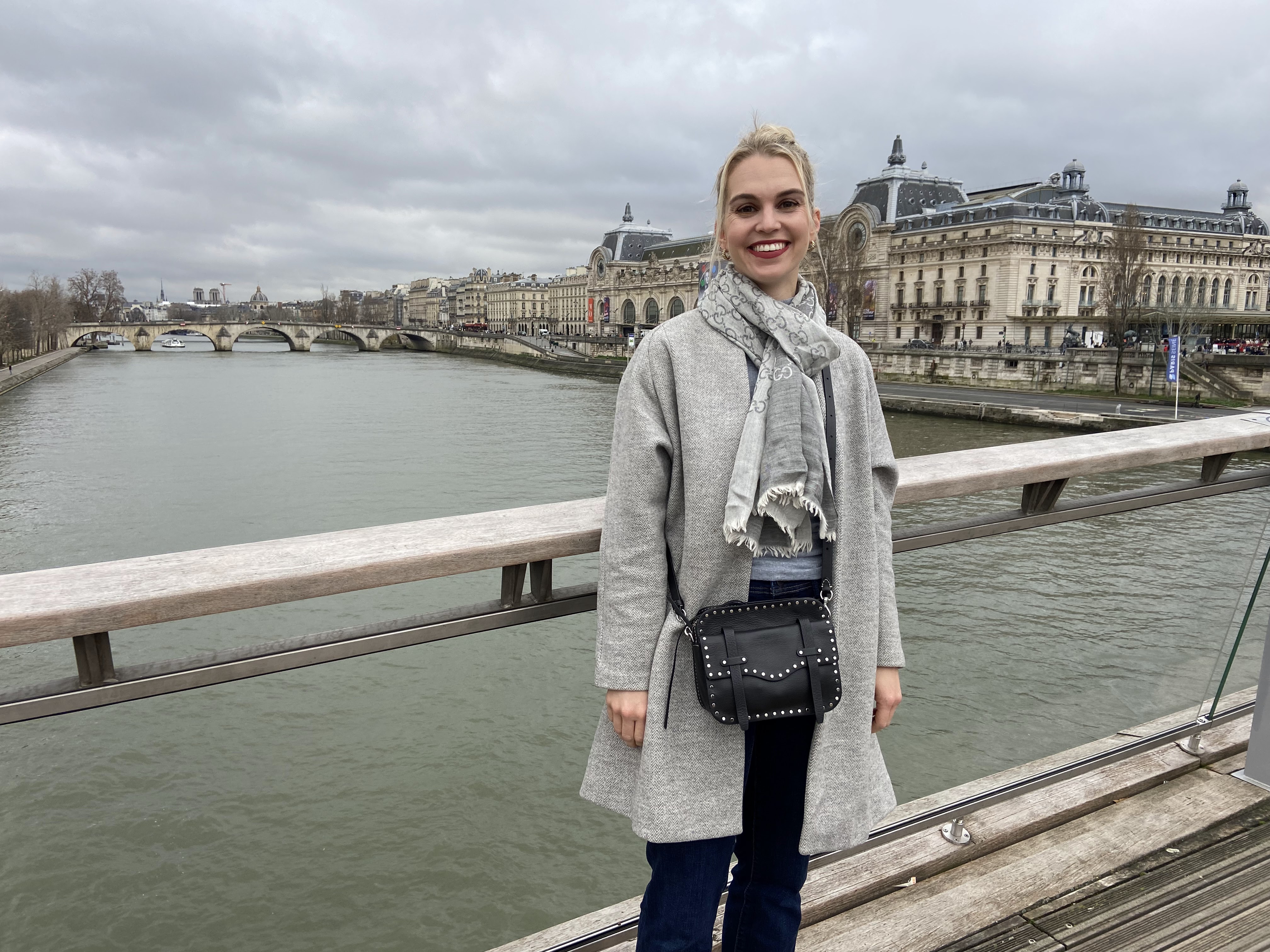
In front of the Musee D'Orsay

Inside the Musee D'Orsay


The hotel bedroom where Oscar Wilde lived and died (6e arrondissement)

Latin Quarter Corner

Saint Supplice Church 

Saint Supplice Fountain

Lovely Haussmann apartment corner 

Luxembourg Gardens 


Ile de Saint Louis

Street Corner on Ile de Saint Louis

A favorite running route 

Marche aux Puces of Saint Ouen

One of the largest "flea market" and secondhand malls in the world! You can truly find everything and anything there, including exquisite 17-18th antiques


Musee Maillot - lovely little French museum highlighting the 19th sculptor's work 

The Swedish cafe and its courtyard.... what a setting!

Square Samuel Rousseau and Saint Clothilde Basilica

Boulevard Saint Germain  

La Seine River

The wonderful chaos of Place de la Concorde, Paris' true center

Le Pont Alexandre III


My favorite picture taken so far


Le Louvre 


Saturday, September 3, 2016

This Summer's Highlights and Last Thoughts

As the summer comes to close and 
I find myself writing this blog in California,
I would now like to take time to 
thank those who made my summer so wonderful.

1. My host family for again welcoming into their home and making me feel like another daughter. I truly am so lucky to have had the opportunity to be part of your family for 8 months now, and hope that anyone of you can visit me in the U.S. so that I can return the favor!

2. Daisy for being so friendly, interesting, and willing to do, see, and talk about anything. (not to mention for our great times together traveling in France!) 

3. The staff at Africa Regional Services and the U.S. Embassy for teaching me so much about the foreign service and helping me develop my professional and administrative skills.

4. My friends, Tory and Dennis, for visiting me in Paris. Both of their visits were such high highlights of my trip and remain very grateful to them for spending time with me in Paris!


5. The other interns so being so friendly and interesting.

6. My friend, Sterling, whom I spent the most time with from the embassy and is such a nice guy.

8. My friend, Ally, for exploring Paris with me and for our deep and interesting conversations on French and American cultures.

9. My parents and sisters for their continual support

10. Those who continued to follow my blog all throughout the summer.

This summer has confirmed my desire to live
in Paris in addition to showing me how much 
I love to blog about Paris. We'll see how this passion
for Paris and for blogging about Paris evolves in the future,
but for the meantime, au revoir!

Frenchisms

Like the people of any culture, the French
have their quirks. Whether it be the way in 
which they eat, behave, or express themselves, the French
have a certain flair about them in whatever they do. That said, my use of 
"flair" is not intended to be condescending or pejorative; instead, it
is meant to signify a certain style or originality that the French have, 
a je ne sais quoi that defines their approach and actions. 

The list below attempts to shed light on some of the Parisians'
quirks and mannerisms with the goal of painting 
a better picture of what it means to be français. 
It is a compilation of what I have observed over the
course of living in Paris for a total of 8 months. That said, I know
that this list draws exclusively from my personal experience
and could be different if I had interacted with other French people
or come from a different culture. 

Nonetheless, I invite you to read my list to see how it
is similar and/or different to your view of the French. 
And if it is one of the two, ask yourself why....

Behavior Mannerisms

1. The French greet and say goodbye to one another by doing the bis, or kissing each other on both cheeks. You are expected to do this when you meet someone new, and if you arrive at a dinner party, you may be expected to do it 5-10 times in a row. You always kiss the person's right cheek, as to avoid a full-on kiss; your cheeks only brush theirs, but you still air-kiss and make a puckering sound. You would only kiss the cheeks if it was someone that you knew well or were dating/married to. 

2. If you say something and the French agree with you, they will often say, oui, or yes. However, sometimes the French will gulp in a little bit of air, make a sound that could be described as "aghast," and then say "oui" in a whisper. If only I had a video of that, the explication would be much more clearer!

3. The French use colloquial expressions when chatting such as du coup, which is an informal combination of "as a result/so"; bref, which is used after the end of long explanation as means to change the subject (direct translation = brief); bha is the sound the French make when they don't know something (think of it like the English "ugh"); ouais is used as a form of "yeah"; pigé is what you say afterwards to show that you understand, but it is used in a very, informal sense. 

4. Interestingly enough, the French now incorporate quite a few English words when they speak, such as "Bye"; "Let's go"; "Yes"; and almost all 21st century English tech and business terms such as "business"; "Ipod"; "management"; "consulting" remain the same in French.

5. The French are some of the fastest walkers on the planet.

6. The French have an opinion on everything and like to share it with you. And almost everyone has an opinion on the U.S. and French presidential elections.

7. "Oh la la" is used not necessarily to express joy or happiness, but rather to express shock or disbelief after a story is told.

8. You always say hello and good-bye to the people in the elevator and to the employee in the store that you are in. 

Food and Drink Quirks

1. Whipped cream is served as a dessert. With nothing else.

2. Picard is a very popular food store that only serves frozen food.

3. Nicolas is a nice, wine-chain that is found on every other block in Paris.

4. The French only refrigerate their milk once it is opened; before that, it is stored in a cupboard.

5. Food and drink is never eaten on the go and in the street. #soamericaine 

6. The French really do carry baguettes with them when they walk back home for dinner.

7. Meat is usually always red and bloody, but the French refer to that as "bleu" meat.

8. A French person can distinguish a Bordeaux from a Burgundy.

9. The French do not snack in between meals. Period.

Living

1. The French do not usually have air conditioning. 

2. If the French have a car, it is tiny.

3. Since rent is so expensive, the French often rent out a free room. 

Food Culture in France


Ratatouille. Tartare de boeuf. Foie Gras.
While food is an important part of any culture,
French food is on another level.

From Bordeaux wines and Normandy cheeses to
Dijon mustard and Parisian Croque Monsieurs, millions
of foreigners come to Paris and other regions each year
to taste its cuisine and experience its culture
through taste and smell. 

In other words, French cuisine is like a tourist attraction.

While foreigners may interact with those who work
at cafés or boulangeries, they often are not able
to experience the ways in which the French themselves regard their food. 
Fortunately, my experience living with a French family
for the past 8 months has allowed me to see and learn
about such interactions. I am often able to eat
breakfast and dinner with my family, with an occasional
brunch on the weekend. Not only have these meals been enjoyable,
but they have also been insightful.

Through these meals, I have come to see cultural differences 
between France and the United States, my country of origin, 
surrounding the consumption and enjoyment of food.
These differences fascinate me, and below, I explain some
of these differences in more detail. 


The Parisian Diet

Parisians are world-famous for being thin, but one always wonders how they do it. With the abundance of boulangeries and the richness of their food, how is it possible that most stores in Paris only carry sizes 0-4? To start, let's look at what a Parisian eats during the week: for breakfast: a slice of brioche with jam or a croissant with a cup of coffee; for lunch, a baguette sandwich, quiche, or green salad (sometimes with a small dessert); for dinner, a meat dish, a vegetable dish, wine, and fruit or yogurt for dessert. Now, consider with alongside what a Parisian eats on the weekend: breakfast will remain the same on Saturday, but lunch will include a dessert, and 3-4 course dinner is often had out at a restaurant or a friend's house. Sunday, on the other hand, is more tranquil, but brunch equates to that of Saturday dinner. 

So...how do the Parisians do it? .... The answer lies not in what they eat, but how much they eat. Not only are restaurants proportions relatively small in Paris (especially to those found in the U.S.), but at home, Parisians only serve themselves what they know they can eat. It is considered rude to leave food on your plate so proportions are small at both the home and out at a restaurant. Thus, you serve and are served only what you can eat and it is up to you to leave none to waste.

It is this combination of small proportions, small meals, and avid walking that keeps Parisians famously thin. 


French Table Manners

The French are quite refined when it comes to table manners. As mentioned in the last paragraph, you serve yourself only what you can eat and leave nothing to waste. If there is extra sauce or residue, then it is expected that you place bread at the tip of a fork and eat the rest to leave the plate perfectly clean. Cutting any item of food is done with the fork in your left hand and the knife in your right, and the fork remains in your left hand during the entire meal. You never put too much food in your mouth as you are expected to carry on the conversation during each mouthful.

In regard to wine and cheese, wine is expected to be drunk slowly, and the taste and flavor of wine is changed from course and course. Regarding the cheese, the cheese is cut differently depending on what kind of cheese it is; since I am yet to be a connaisseur in cheese cutting, I usually just follow the person to my right. A baguette must accompany the eating of the cheese as cheese is never eaten plainly. However, the piece of bread cannot be placed on the plate, but to the side of your plate. You tear off a piece of bread, place the cheese on it, and then place the bread and cheese into your mouth. You are expected to serve yourself the right amount of bread and cheese so that there is, again, no left overs on your plate. (It must be noted, however, that cheese is usually served during a fancier 4 course meal and then followed by a dessert.)

Dessert is usually what follows the plat (or main dinner) during the weekday; however, dessert is not what you would typically expect. A weekday dessert is usually yogurt or fruit, which you can only eat with a fork and knife! (Interestingly, fruit is never eaten during breakfast) A brunch/Saturday dinner dessert is more along the lines of what you would expect: a chocolate mousse, crème brûlée, a fruit cake, etc.


Restaurant Tips

Ordering at a French restaurant is quite simple. Since most Parisian cafés have waiters whom speak English or offer menus in English, you should feel quite comfortable ordering. However, here are a few tips for those of you who aren't French speakers to improve your dining experience:

1) Always greet the hostess with either Bonjour (Good day) or Bonsoir (Good evening)
2) Never sit at an empty table; wait and asked to be seated
3) Please is s'il vous plaît (see-voo-play), and thank you is merci (mare-see)
4) I always order a watcher pitcher (une carafe d'eau) along with my meal since it is free and re-fillable
5) If you order meat, it is usually red and bloody; thus, if you want a well-cooked steak or hamburger, I recommend that you specify that you would like your meat bien cuit (bee-in quee), or well-cooked.
(However, I do recommend that you have your meat the French way!)
6) The check is l'addition, and a small tip is expected